
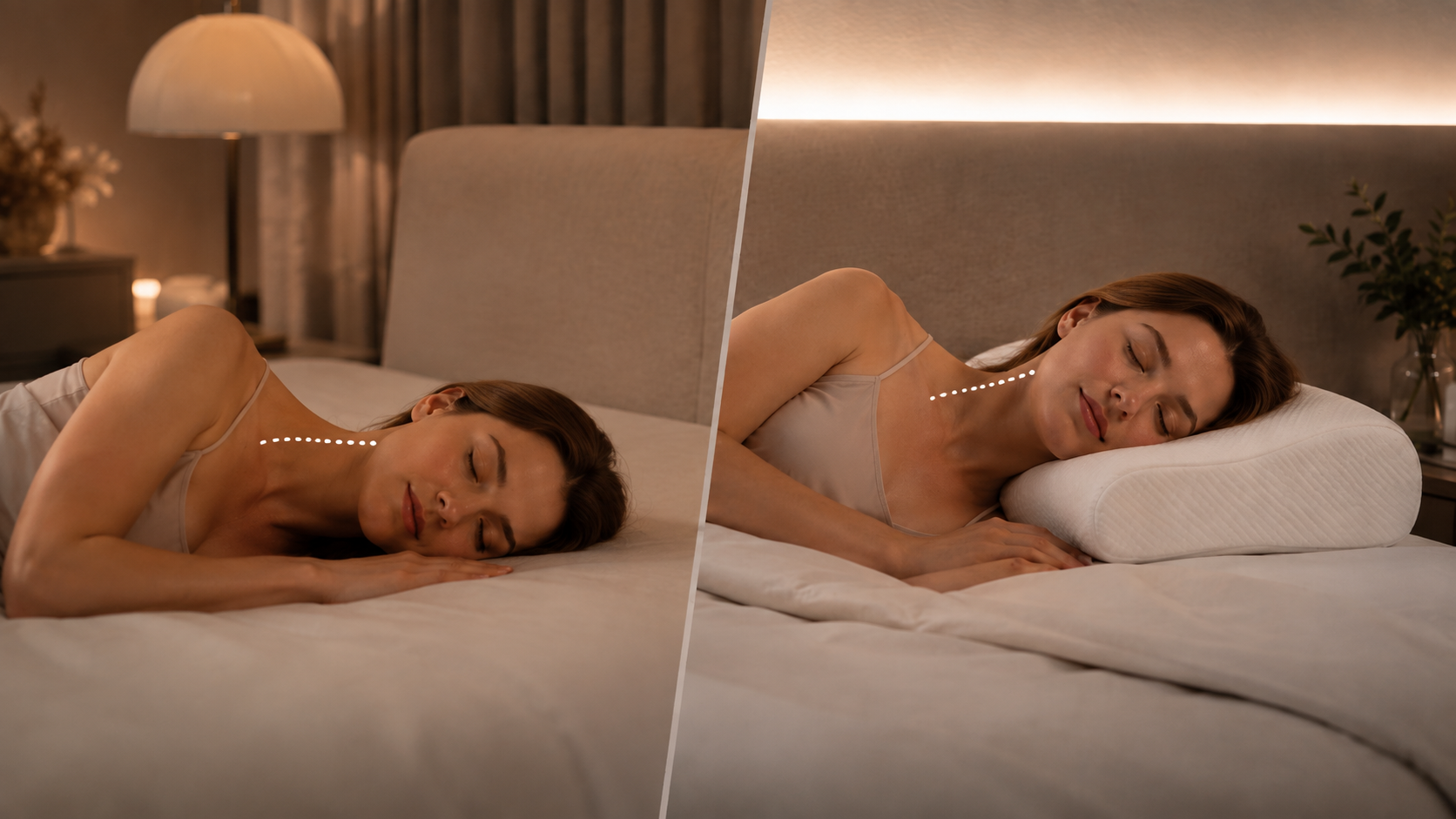
Understanding the Connection Between Pillow Support, Neck Alignment, and Better Sleep
Forward head posture has become increasingly common in modern life.
With long hours spent working at a desk, looking down at smartphones, and maintaining fixed positions throughout the day, many people experience changes in how their head, neck, and shoulders naturally align.
As a result, more people are searching for simple ways to improve their posture and create a more comfortable sleeping environment.
One common question is:
Can sleeping without a pillow improve forward head posture?
Some people believe removing a pillow allows the neck to return to a more natural position. Others believe that proper pillow support is necessary to maintain comfortable alignment during sleep.
The truth is more complex.
Sleeping without a pillow may feel comfortable for some people, especially if their current pillow is too high, too firm, or does not match their sleeping style. However, removing support completely is not always the best solution.
Your sleeping posture depends on several factors, including:
- Your sleeping position
- Your body shape
- Pillow height
- Neck support
- Overall sleep habits
The goal of healthy sleep posture is not simply to use no pillow.
The goal is to create a comfortable sleeping position where your head, neck, and shoulders can stay naturally supported throughout the night.
In this article, we will explore how sleeping without a pillow affects forward head posture, neck alignment, and shoulder positioning — and why choosing the right pillow may be more important than simply removing your pillow.
What Is Forward Head Posture?
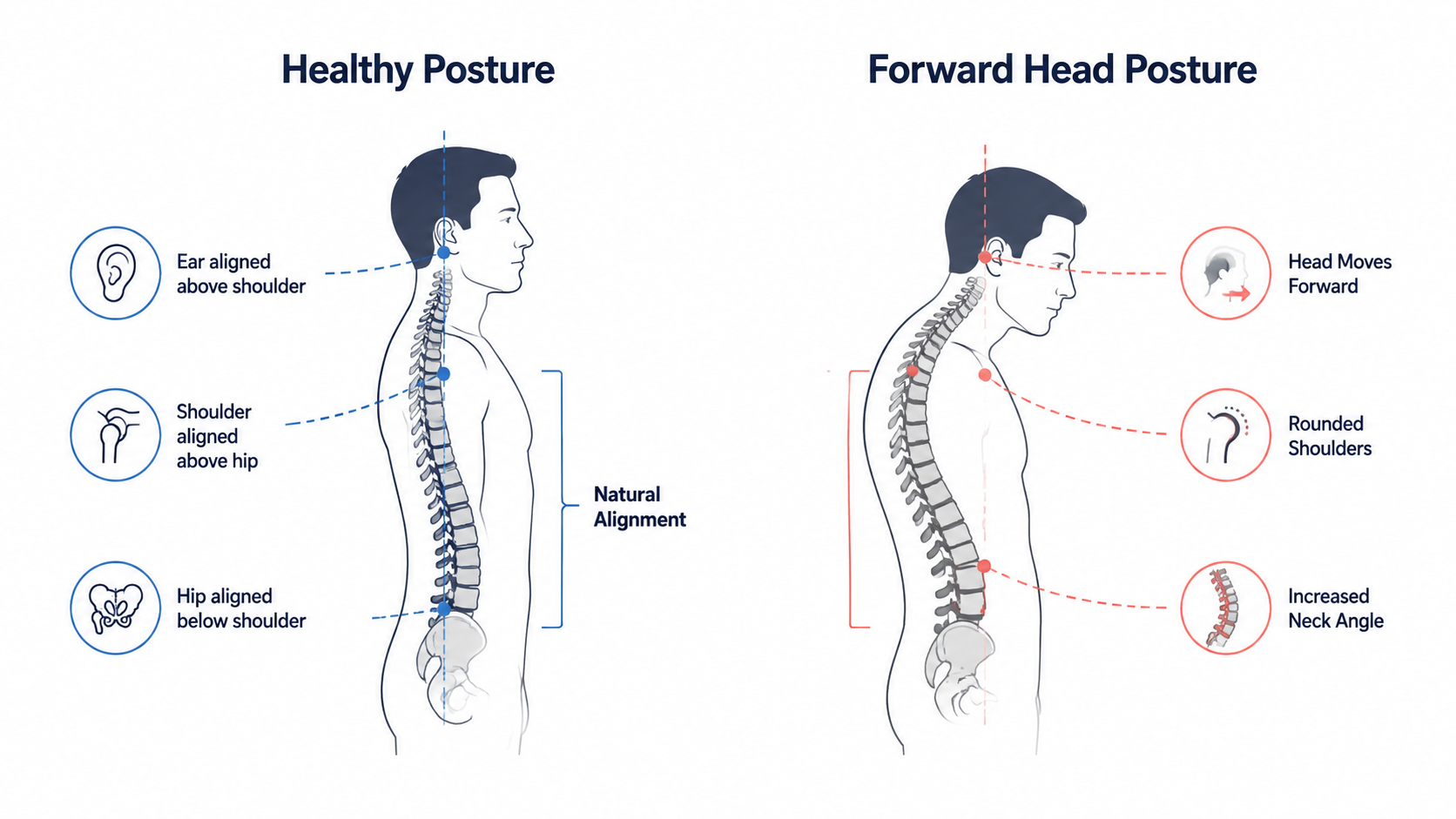
Forward head posture occurs when your head moves forward compared with its natural position above your shoulders.
When viewed from the side, healthy alignment generally means your ears are positioned closer to a vertical line above your shoulders.
However, modern lifestyle habits can gradually encourage the head to move forward.
Common factors that may contribute to forward head posture include:
-
Spending hours working on computers
-
Looking down at smartphones frequently
-
Poor sitting posture
-
Limited movement throughout the day
-
Lack of awareness of body alignment
When the head stays forward for long periods, the muscles around the neck and shoulders may need to work harder to support that position.
This is why many people experience:
-
Neck stiffness after waking up
-
Shoulder tightness
-
Difficulty finding a comfortable sleeping position
Many people who spend their days in forward head positions naturally begin to wonder:
Can changing the way I sleep help support better posture?
Can Sleeping Without a Pillow Improve Forward Head Posture?
The idea behind sleeping without a pillow is easy to understand.
Without a pillow, some people believe that the head can naturally move backward and allow the neck to return to a better position.
However, whether this works depends largely on your sleeping position and body structure.
A pillow itself is not necessarily the reason for poor posture.
In many cases, the real problem is using the wrong pillow.
For example:
A Pillow That Is Too High
A pillow that is too high may:
- Push the head forward
- Change the natural neck angle
- Create an uncomfortable sleeping position
A Pillow That Is Too Low
A pillow that is too low may:
- Fail to provide enough support
- Allow the neck to drop
- Reduce overall comfort
The purpose of a pillow is not to force your body into a fixed position.
A good pillow should help your:
- Head
- Neck
- Shoulders
- Spine
stay in a comfortable and balanced position.
The goal is not removing support.
The goal is finding the right support.
How Sleeping Without a Pillow Affects Different Sleeping Positions
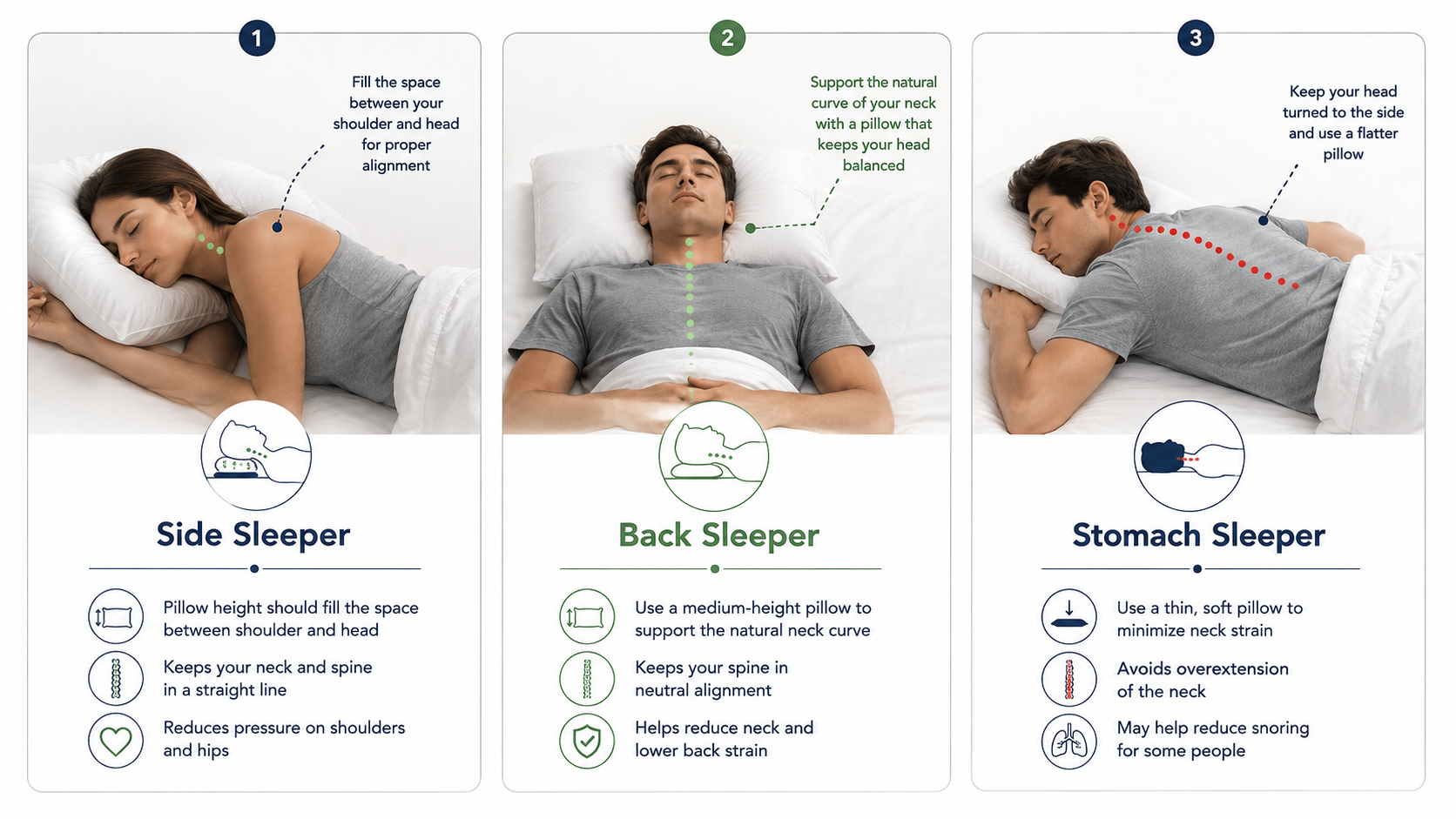
Your sleeping position plays an important role in determining whether sleeping without a pillow feels comfortable.
Different sleeping styles require different levels of support.
Side Sleepers: Why Neck Support Matters
Side sleeping is one of the most common sleeping positions.
However, side sleepers usually need more support because the shoulder creates a natural gap between the mattress and the head.
Without a pillow, the head may tilt downward toward the mattress.
This can create an uneven sleeping position where:
- The neck bends sideways
- The head is no longer aligned with the spine
- The shoulders may experience uneven pressure
For side sleepers, completely removing a pillow may not provide enough support.
A better approach is choosing a pillow that fills the space between your shoulder and head while helping maintain a more comfortable neck position.
The right pillow height can help create a more balanced sleeping posture throughout the night.
Back Sleepers: Supporting the Natural Curve of the Neck
Back sleepers often benefit from gentle support that follows the natural curve of the neck.
Sleeping without a pillow may feel comfortable for some individuals.
However, others may notice that their neck feels unsupported because the head rests too far backward.
A pillow with a supportive contour can help create a more comfortable position by supporting the natural shape of the neck.
The ideal support should feel natural and comfortable, not restrictive.
Stomach Sleepers: Finding a Comfortable Sleeping Position
Stomach sleeping is a unique position because the head usually needs to rotate to one side for breathing.
This places the neck in a different position compared with side or back sleeping.
Some stomach sleepers prefer using a very thin pillow or no pillow because it reduces the height between the head and mattress.
However, improving overall sleep comfort often requires looking at the complete sleeping position rather than focusing only on whether a pillow is used.
Pillow Height and Neck Alignment: Why It Matters
Many people ask:
“Should I sleep without a pillow?”
But a more important question may be:
“Is my pillow the right height for my body?”
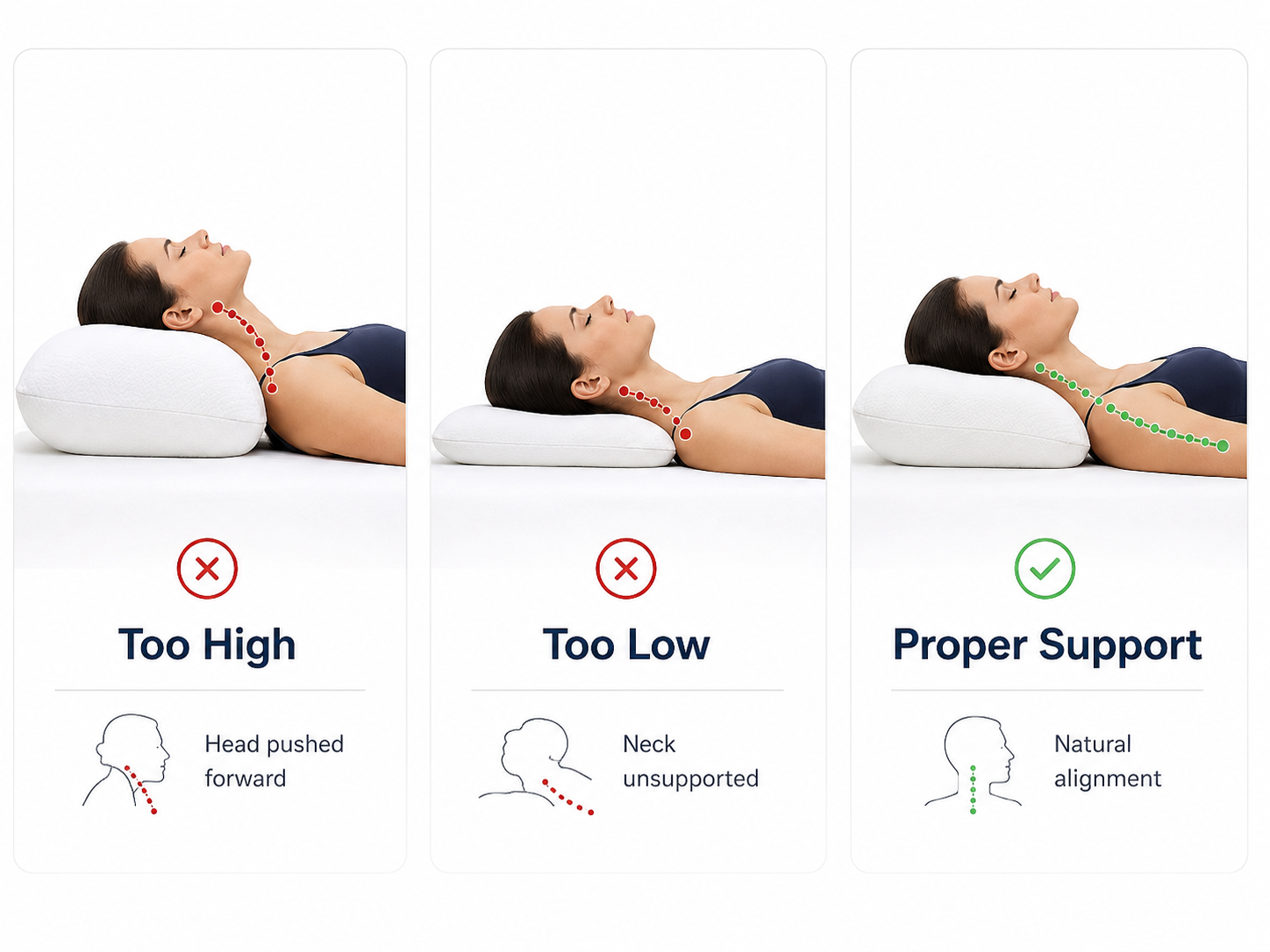
Pillow height directly affects how your head and neck rest during sleep.
When a Pillow Is Too High
A pillow that is too high may:
- Push the head forward
- Change the natural neck angle
- Affect sleeping comfort
When a Pillow Is Too Low
A pillow that is too low may:
- Provide insufficient support
- Allow the neck to drop
- Reduce comfort during sleep
The ideal pillow helps your head, neck, and spine stay in a balanced and comfortable position.
Choosing the right pillow is often more important than simply deciding whether to use one.
Why an Ergonomic Pillow May Be a Better Choice Than No Pillow
For many people, the solution is not completely removing support.
Instead, it is choosing a pillow designed around the natural shape of the body.
Ergonomic pillows are designed differently from traditional flat pillows.
They focus on providing support where your head and neck need it most.
A well-designed ergonomic pillow can provide:
Contoured Neck Support
A curved design follows the natural structure of the neck and helps create a more supportive sleeping position.
Adaptive Comfort
Memory foam responds to your body shape and sleeping position, creating a more personalized comfort experience.
Support for Different Sleeping Styles
Whether you sleep on your:
- Side
- Back
- Combination positions
the right pillow can help create a more comfortable sleep environment.
The purpose of an ergonomic pillow is not to force your body into a fixed position.
It is designed to work with your natural sleeping posture.
Can the Right Pillow Support Better Sleeping Posture?
Your daytime posture and nighttime sleeping position are connected.
While a pillow cannot replace healthy daily habits, exercise, or proper sitting posture, the right sleep support can help create a more comfortable nighttime routine.
A supportive pillow may help:
✓ Maintain a more comfortable neck position
✓ Support natural alignment during sleep
✓ Reduce discomfort caused by poor support
✓ Improve overall sleep comfort
Sleeping Without a Pillow vs Using an Ergonomic Pillow
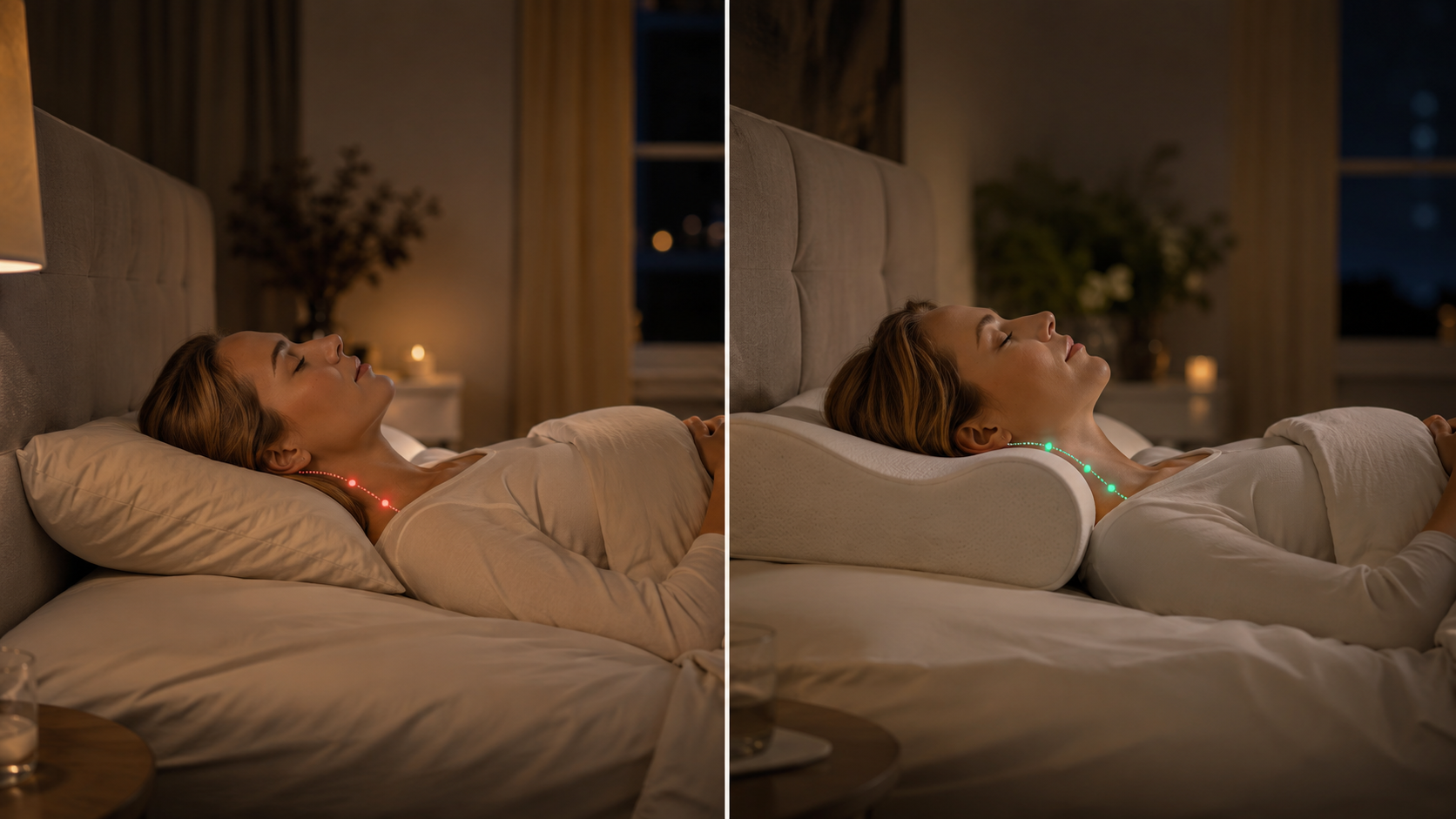
The real question is not:
“Should I use a pillow or not?”
A better question is:
“Does my pillow provide the support my body needs?”
For some people, sleeping without a pillow may feel comfortable.
However, for many sleepers — especially side sleepers or people looking for additional neck support — a properly designed ergonomic pillow may provide a better balance between comfort and support.
Better sleep support is not about changing your body position completely.
It is about creating an environment where your body can rest naturally.
Final Thoughts
Sleeping without a pillow may seem like a simple way to improve posture, but there is no single sleeping solution that works for everyone.
Your:
- Sleeping position
- Body structure
- Pillow height
- Level of support
all influence how comfortable your sleep feels.
Instead of focusing only on removing your pillow, consider whether your current pillow provides the support your body actually needs.
Better sleep does not come from having less support.
It comes from having the right support.
Explore Better Sleep Support
Finding the right pillow is about matching your sleeping position with the level of comfort and support your body needs.
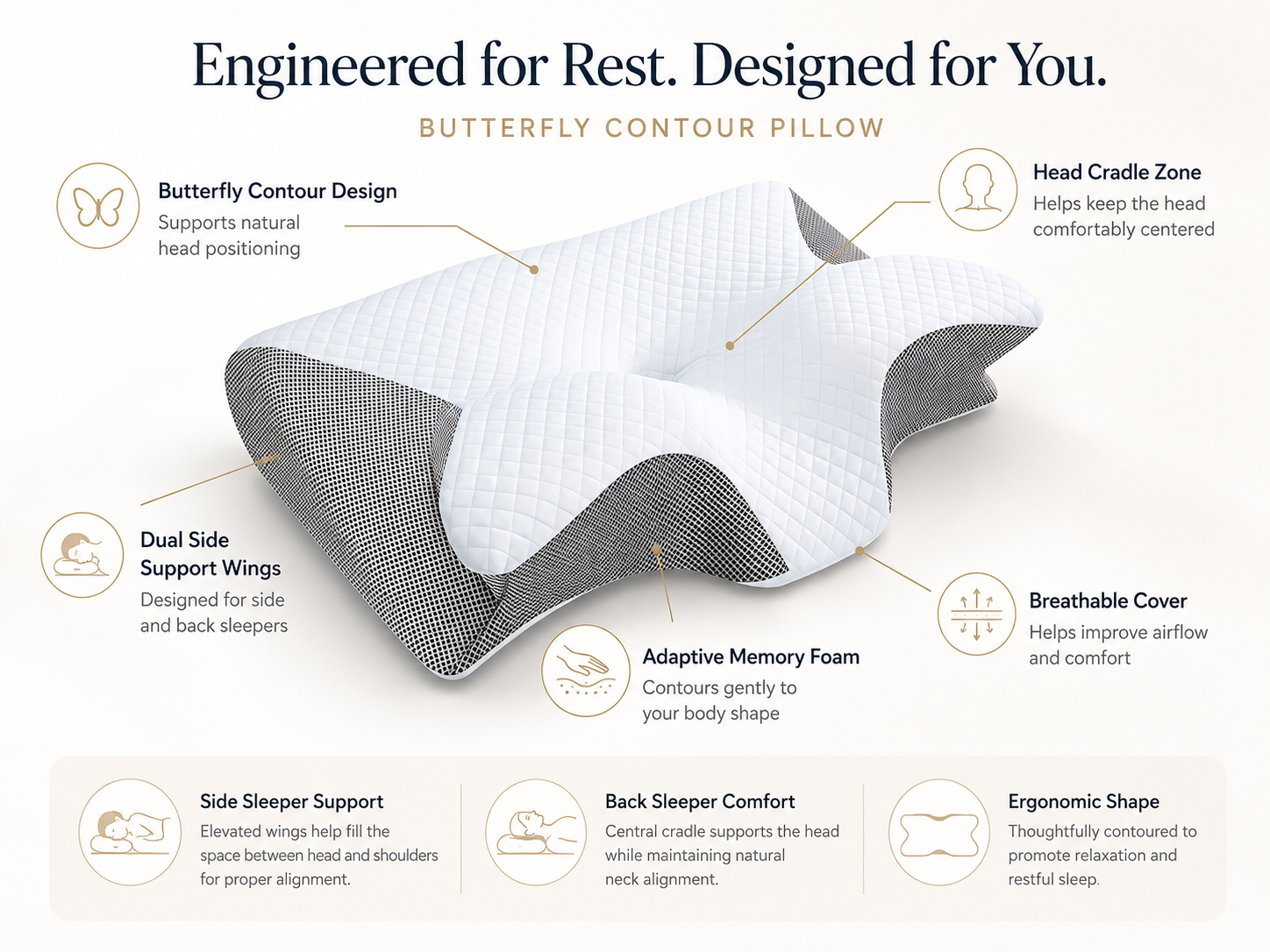
An ergonomic pillow with a contoured design and adaptive memory foam can help create a more comfortable sleep environment by supporting the natural relationship between your head, neck, and shoulders.
Whether you sleep on your side, back, or frequently change positions during the night, choosing the right support can make a difference in your overall sleep experience.
For more information, please click here: