
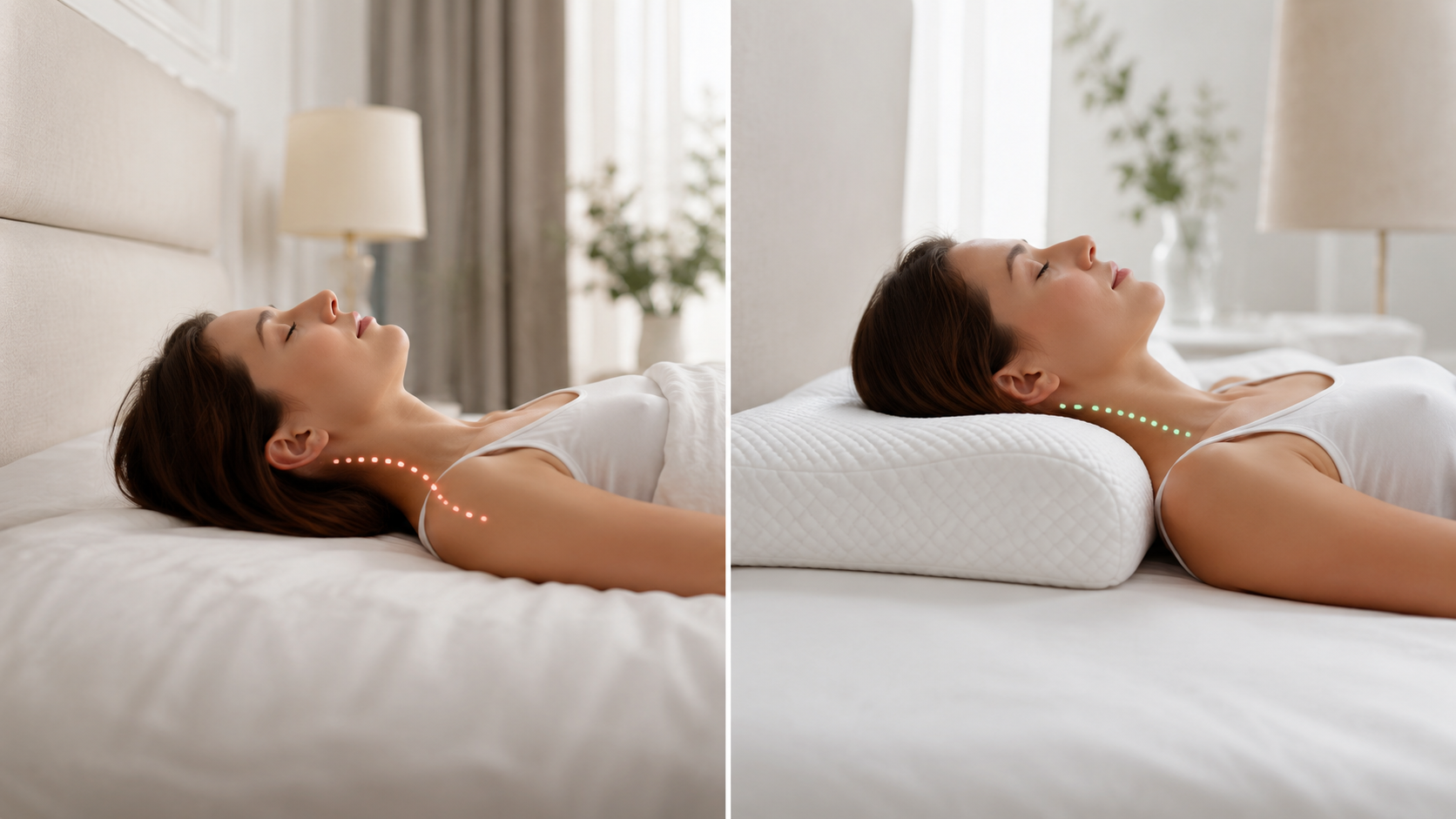
Many people ask:
“Is sleeping without a pillow better for your posture?”
Some believe removing a pillow allows the neck to return to a more natural position. Others argue that proper pillow support is essential for maintaining spinal alignment during sleep.
The truth is more balanced:
Sleeping without a pillow may benefit certain sleepers, but it is not a universal solution for better posture or healthier sleep.
The most important factor is not whether you use a pillow — it is whether your head, neck, and spine remain properly supported throughout the night.
Why Do People Consider Sleeping Without a Pillow?
The idea of sleeping without a pillow has become popular because many people associate a flatter sleeping position with better alignment.
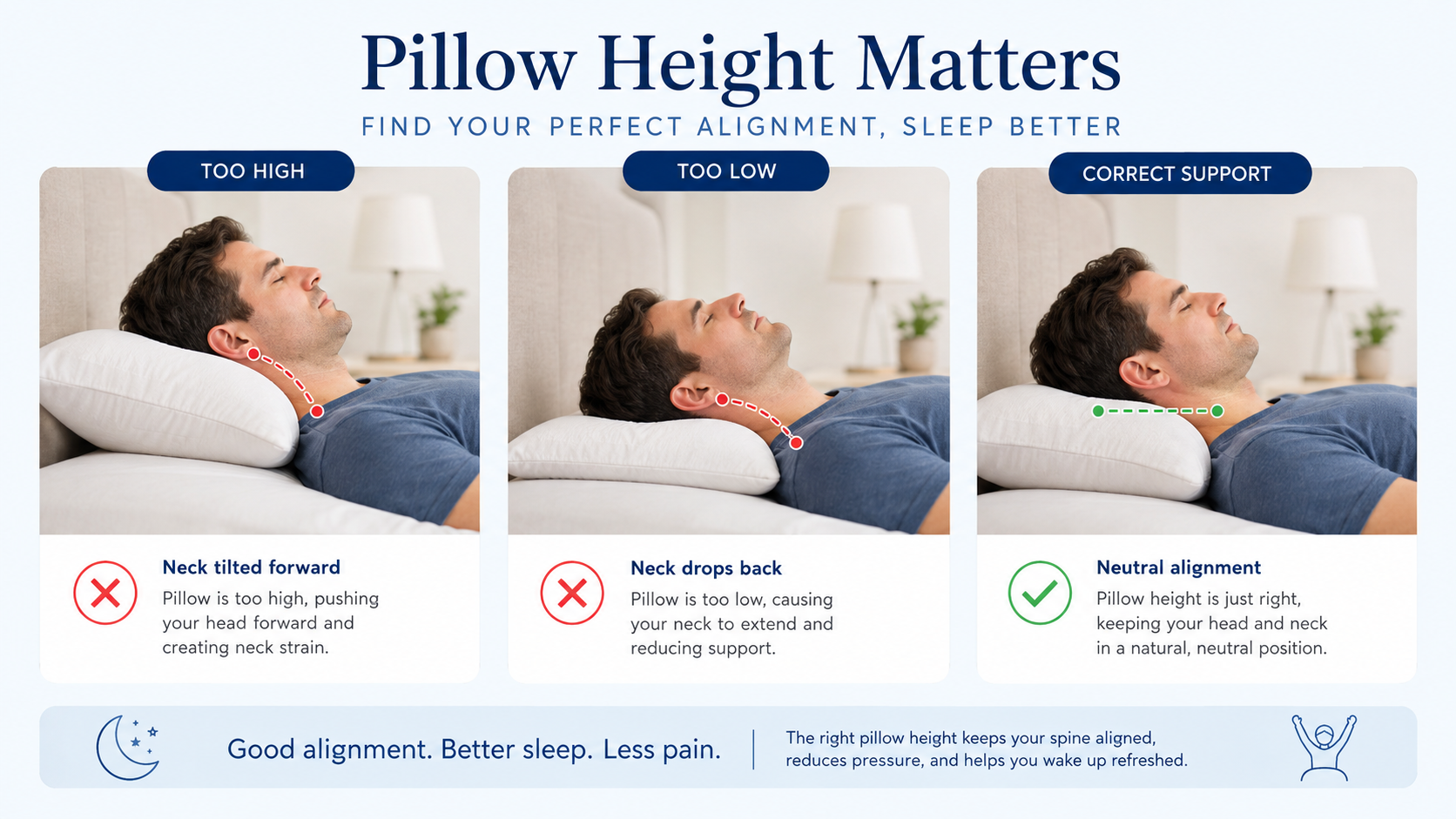
A pillow changes the relationship between your head and spine. If a pillow is too high, it can push your head forward. If it is too low, it may fail to support the natural curve of your neck.
The goal of a pillow is not simply to lift your head.
The goal is to help maintain a neutral cervical position while you sleep.
Research on pillow ergonomics suggests that pillow height and shape can influence cervical alignment, pressure distribution, and muscle activity around the neck and shoulders.
Can Sleeping Without a Pillow Improve Posture?
The short answer:
Sometimes, but not for everyone.
Your sleeping posture is influenced by several factors:
- Sleep position
- Pillow height
- Mattress firmness
- Body shape
- Existing posture habits
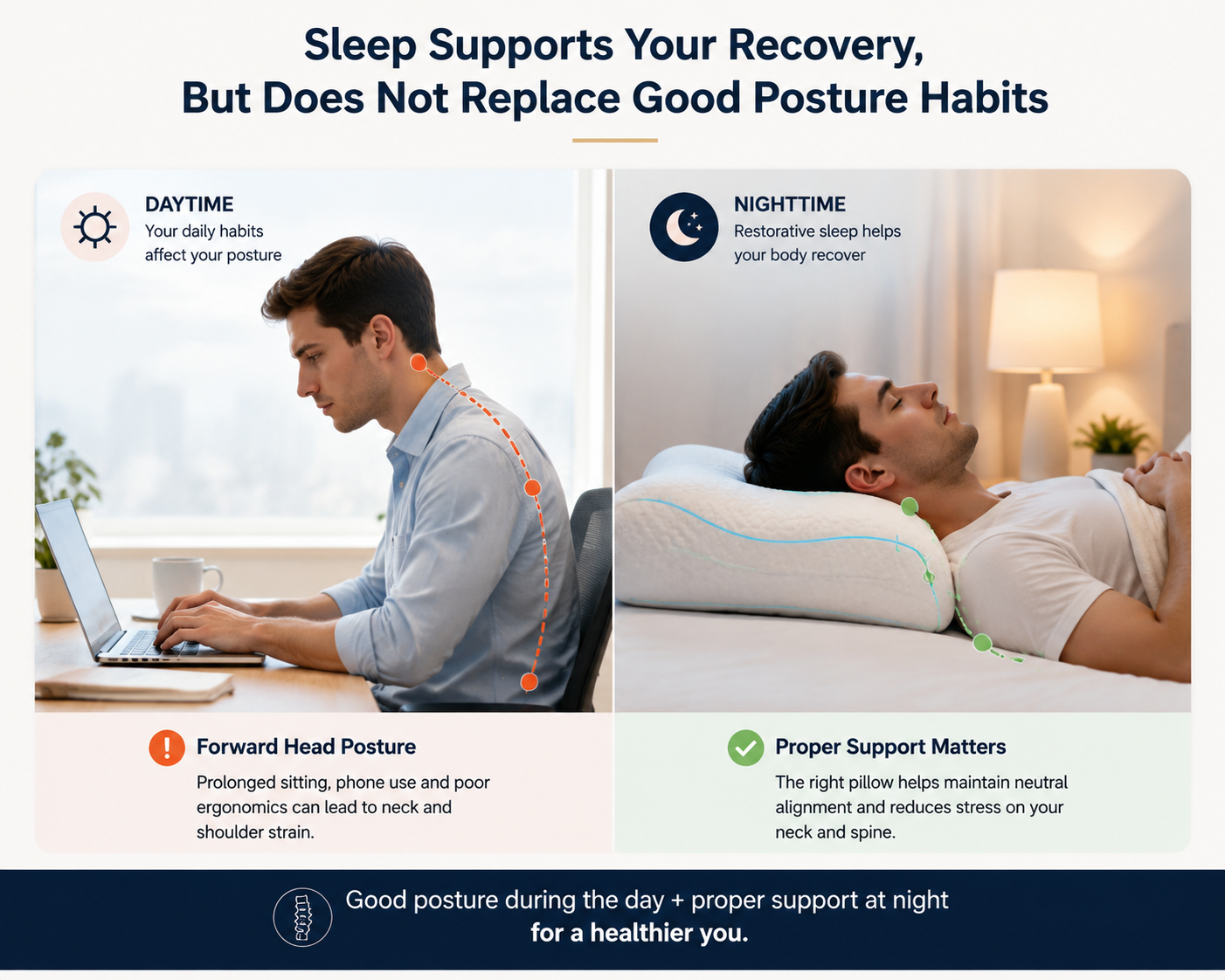
A pillow cannot completely correct daytime posture problems such as forward head posture caused by prolonged computer or phone use.
However, nighttime positioning matters because most people spend around one-third of their day sleeping.
Maintaining a neutral spine position during sleep may help reduce unnecessary stress on muscles and joints.
Sleeping Without a Pillow: Potential Benefits
May Help Some Stomach Sleepers
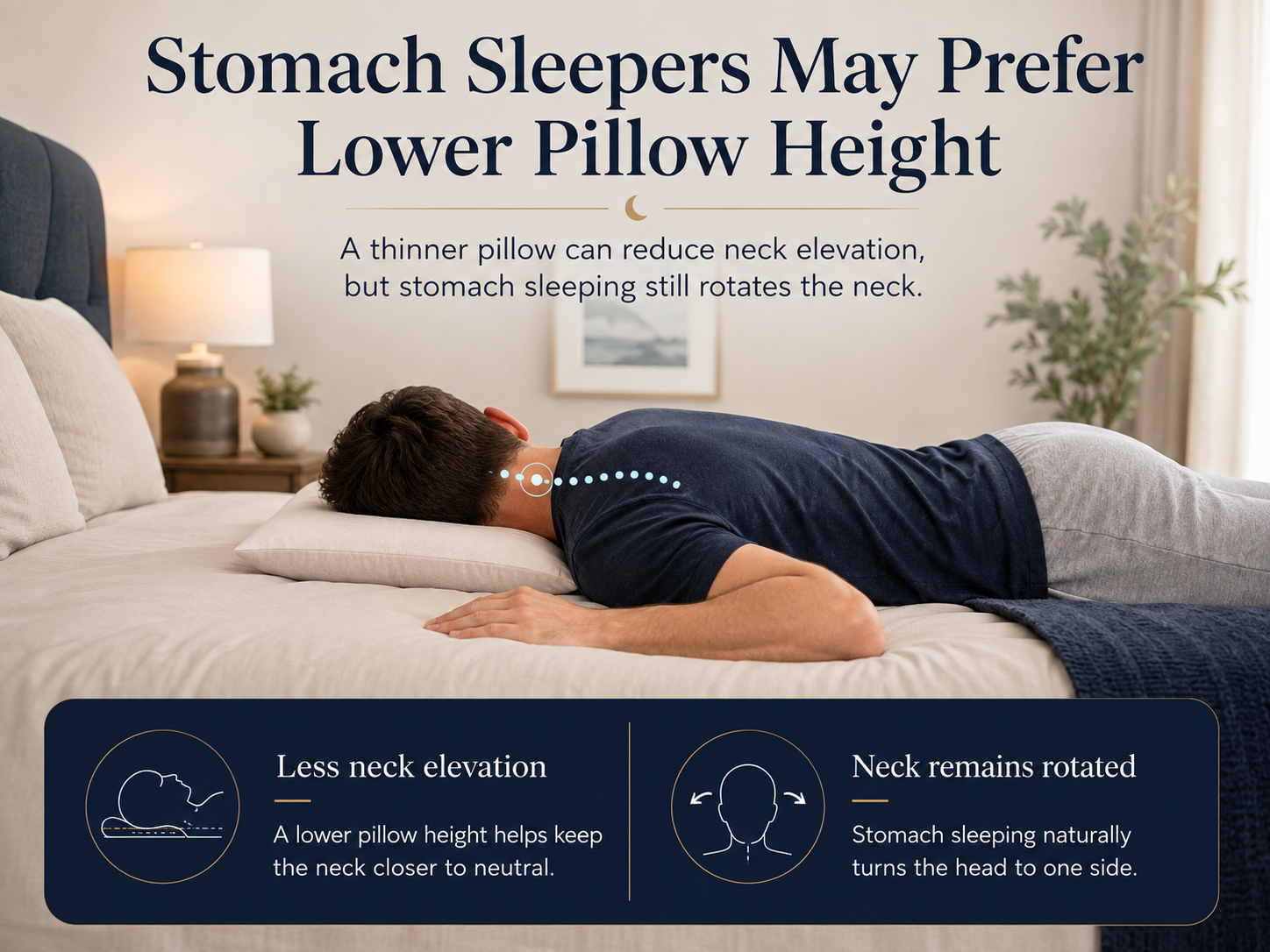
Stomach sleeping naturally places the neck in a rotated position because the head must turn to one side.
For some stomach sleepers, a thick pillow can increase the angle between the head and neck.
Removing the pillow or using a very thin pillow may reduce excessive neck elevation.
However, stomach sleeping itself can still create rotation through the cervical spine, meaning removing a pillow does not automatically eliminate neck strain.
May Feel More Comfortable For Certain Individuals
Sleep comfort is highly personal.
Some people naturally prefer a flatter sleeping surface because it feels more relaxed or reduces pressure around the neck.
However, comfort alone does not always mean optimal spinal support.
Why Sleeping Without a Pillow May Not Work For Everyone
Side Sleepers Usually Need More Support
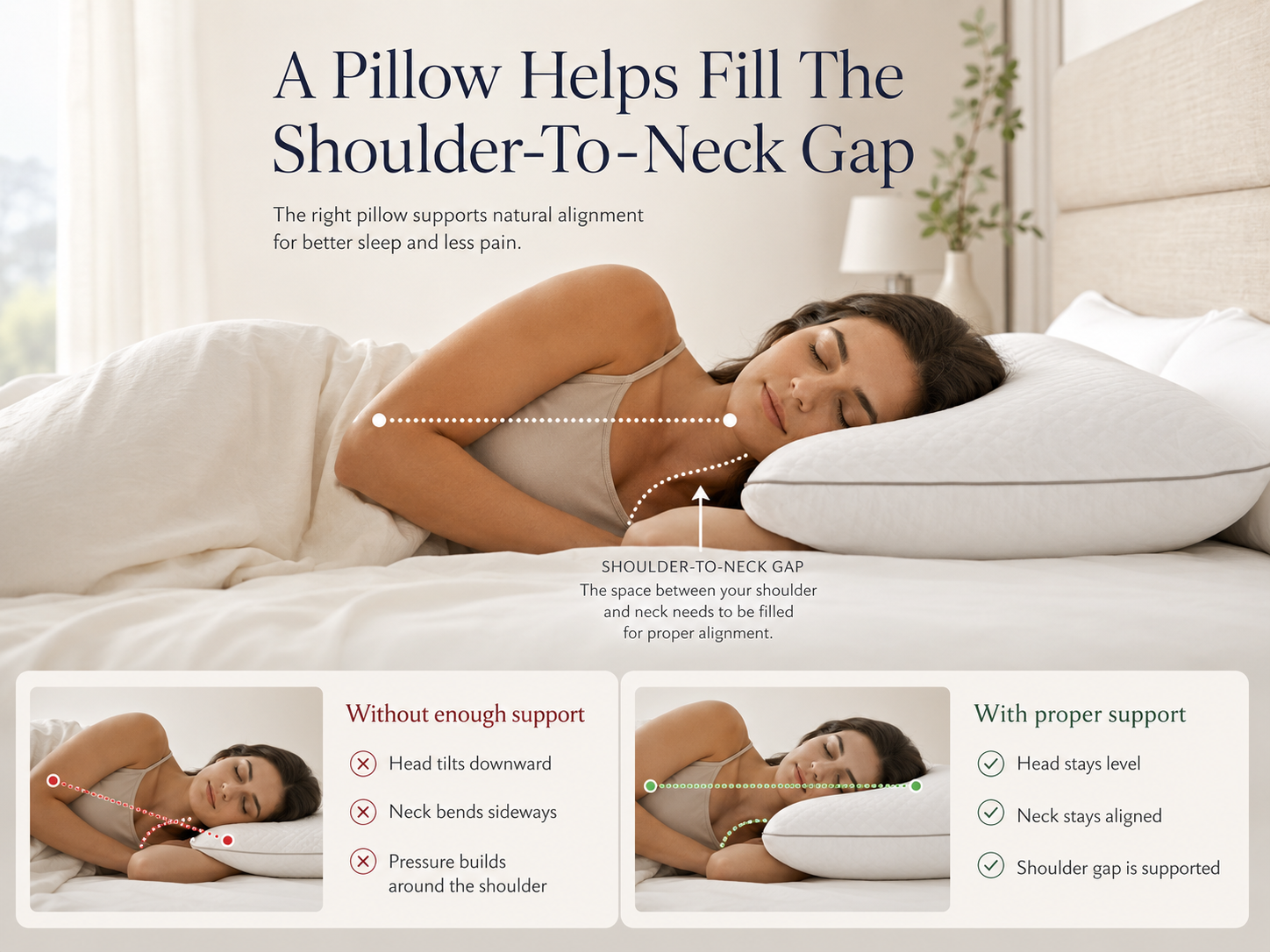
Side sleeping creates a natural gap between your shoulder and your head.
- The head may tilt downward
- The neck may bend sideways
- The spine may lose its neutral position
For side sleepers, the ideal pillow should fill the space between the shoulder and head while keeping the neck aligned with the spine.
Back Sleepers Often Benefit From Neck Support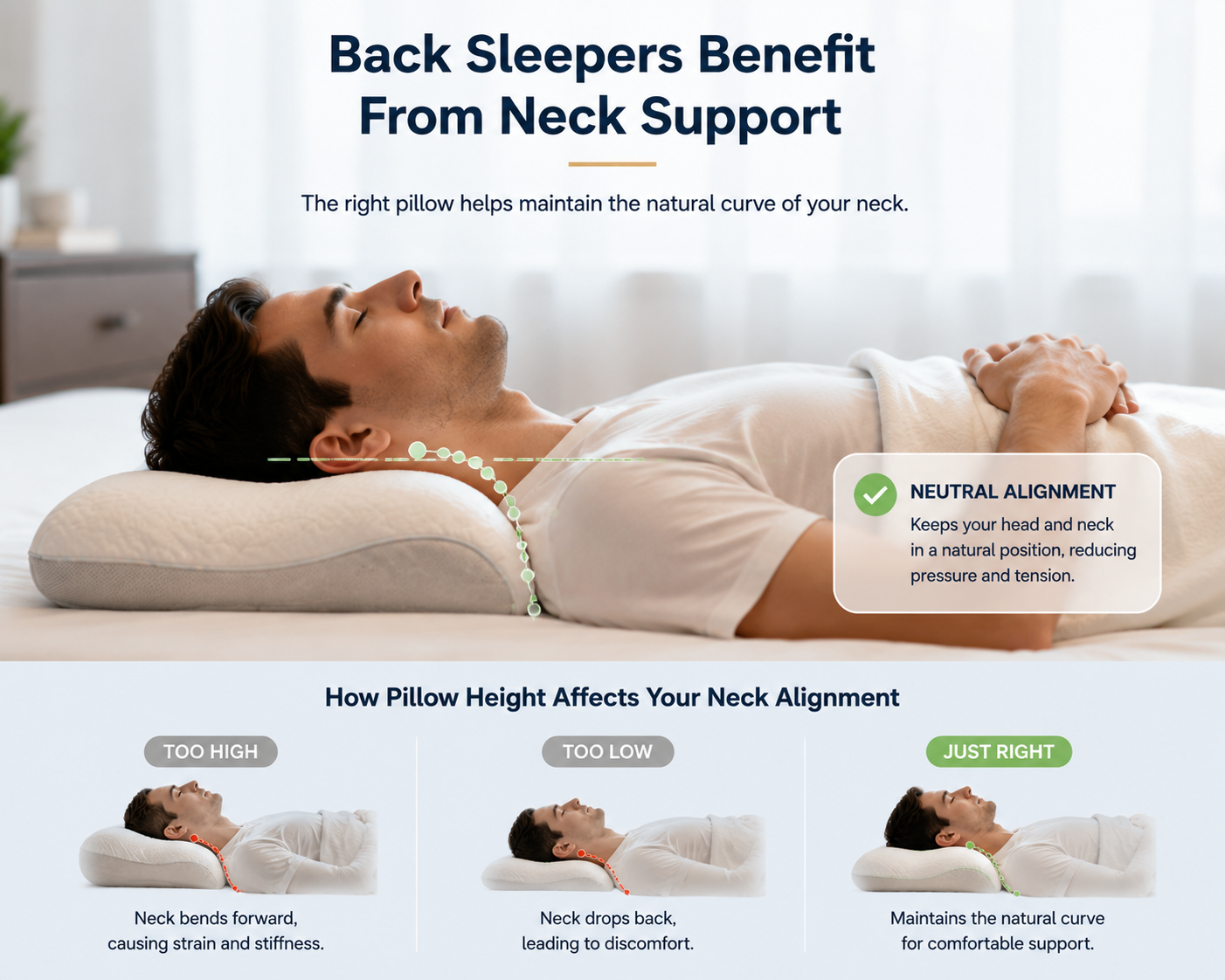
When sleeping on your back, the neck naturally maintains a slight curve.
A supportive pillow helps maintain this curve without pushing the head too far forward.
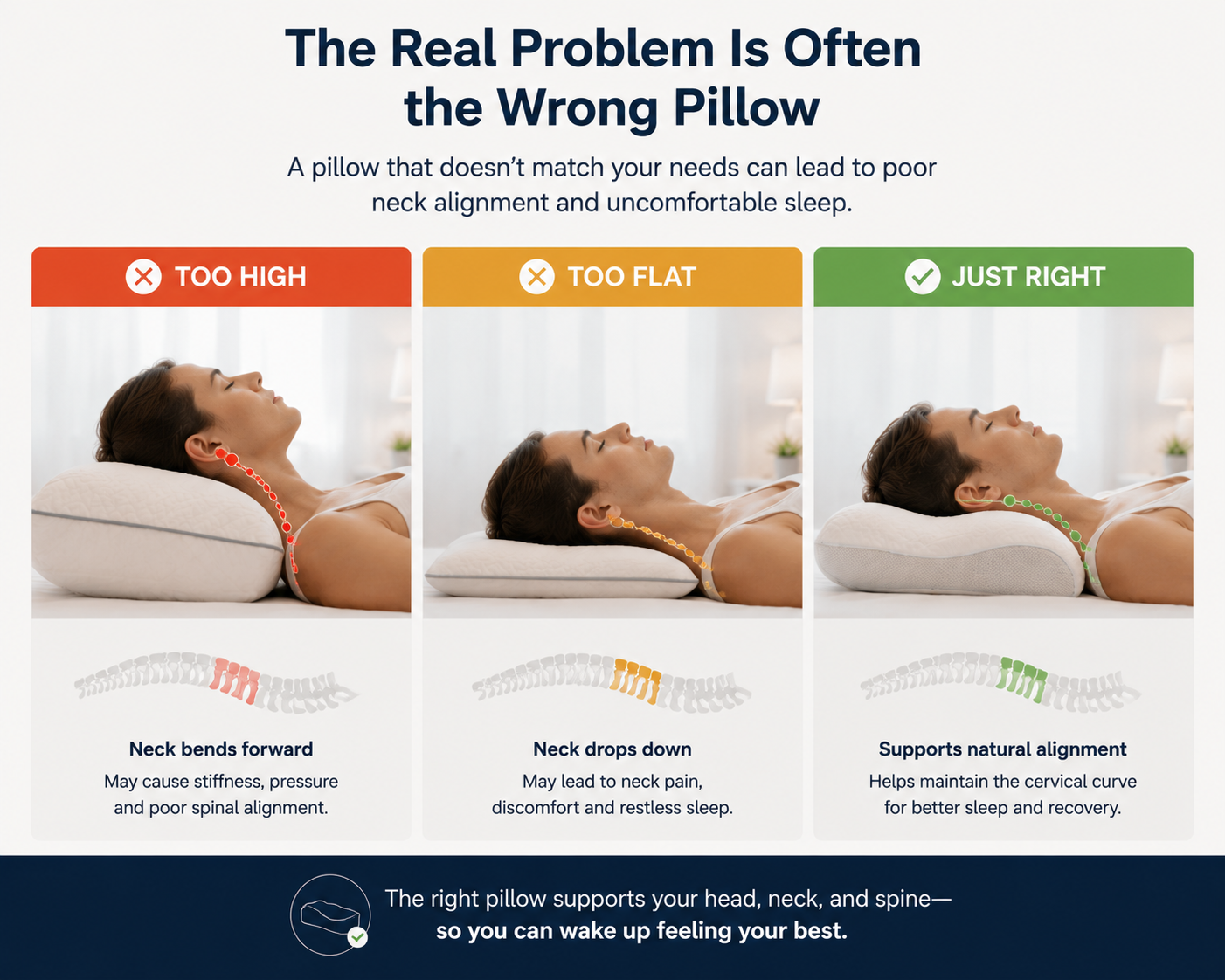
A pillow that is too high may create neck flexion, while one that is too flat may provide insufficient support.
The Real Problem Is Often The Wrong Pillow
Many people think:
“My pillow hurts my neck, so maybe I should stop using one.”
But the problem may not be the existence of a pillow.
It may be:
Pillow Height
A pillow that is too high can push your head forward.
Pillow Firmness
A pillow that collapses too easily may fail to provide consistent support.
Pillow Shape
A pillow that does not match your sleeping position may create pressure points.
A good pillow should:
- Maintain natural neck alignment
- Support the cervical curve
- Reduce unnecessary pressure
- Adapt to your sleeping position
How Pillow Support Affects Forward Head Posture
Forward head posture occurs when the head shifts forward relative to the shoulders.
Common causes include:
- Prolonged desk work
- Smartphone use
- Poor sitting habits
While sleep cannot completely reverse posture problems, the position of your neck during rest can influence how your muscles and joints are supported overnight.
How To Choose The Right Pillow Based On Your Sleeping Position
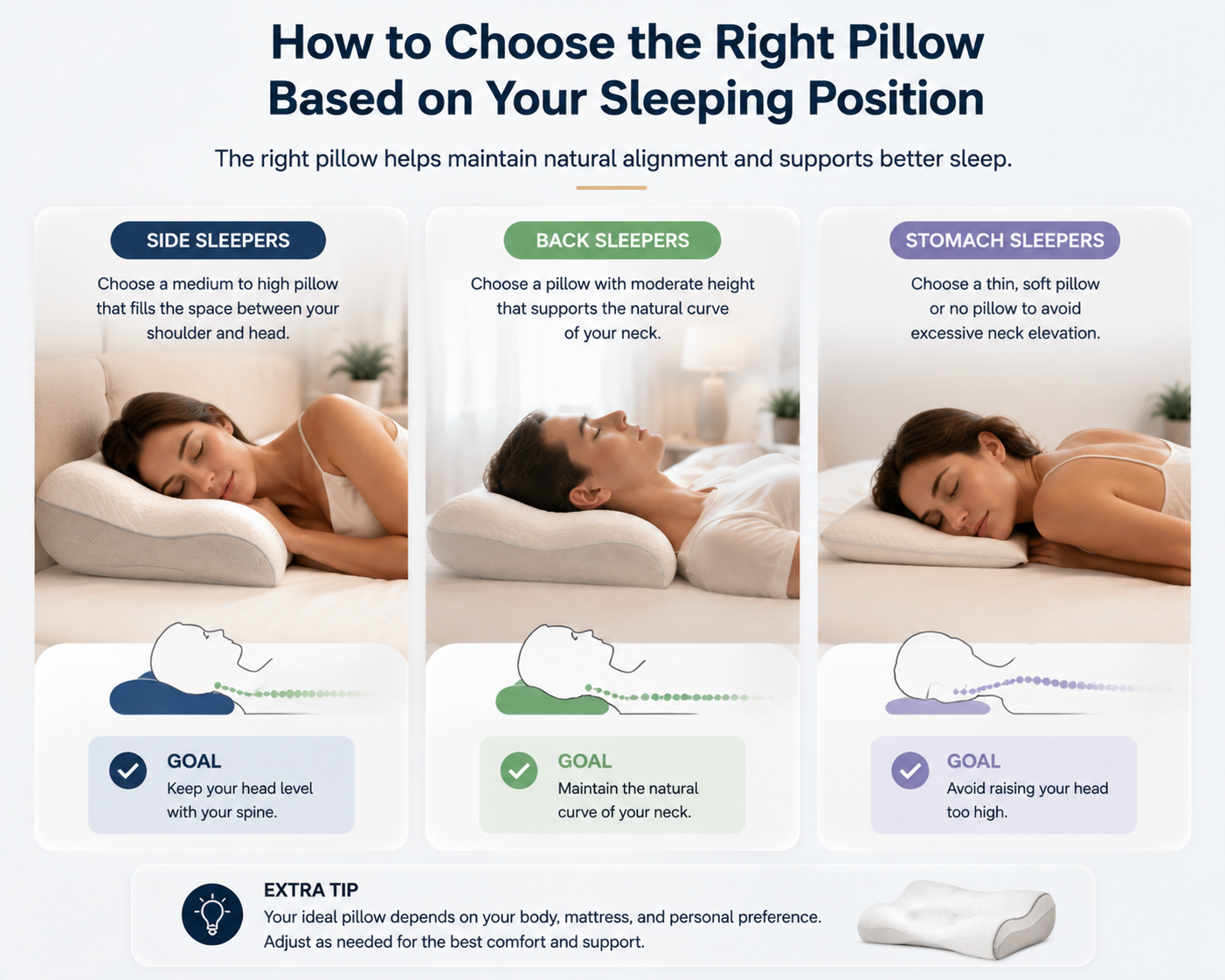
Side Sleepers
- Medium to higher support
- Stable structure
- Enough height to fill the shoulder-to-neck gap
Goal: Keep your head level with your spine.
Back Sleepers
- Moderate height
- Supportive but comfortable material
Goal: Maintain the natural curve of your neck.
Stomach Sleepers
- Thin pillow
- Softer support
Goal: Avoid excessive neck elevation.
Should You Stop Using a Pillow?
For most people, completely removing a pillow is not necessarily the best choice.
Instead, ask yourself:
- Do I wake up with neck stiffness?
- Does my pillow push my head forward?
- Does my neck feel unsupported?
- Does my pillow match my sleeping position?
The right pillow should support your body, not force your body into an unnatural position.
Finding Better Sleep Support With Harlven
At Harlven, we believe better sleep starts with proper support.
Our Zero-Pressure Memory Foam Pillow is designed around the principle of maintaining comfortable neck alignment while adapting to your natural sleeping posture.
Instead of forcing your head into one position, the ergonomic memory foam design helps distribute pressure and provide balanced support throughout the night.
Final Thoughts
So, should you sleep without a pillow?
The answer depends on your body and sleeping style.
For some stomach sleepers, sleeping without a pillow may feel comfortable.
For many side and back sleepers, proper pillow support is usually more important than removing the pillow completely.
Better sleep is not about having more or less support.
It is about having the right support in the right position.