

You Sleep 8 Hours, But Still Feel Exhausted?
You go to bed on time. You get the recommended 7–8 hours of sleep. Yet when morning arrives, you still feel tired.
Your neck feels tight. Your shoulders feel heavy. You may even feel like you need another night of rest before your day has even started.
Many people immediately blame stress, workload, or their mattress. However, one often-overlooked factor is much closer:
Your pillow.
A pillow is more than a soft place to rest your head. It plays an important role in supporting your head, neck, and spine alignment throughout the night.
When your pillow does not provide the right height or support, your sleeping posture may become uncomfortable, affecting how rested you feel in the morning.
A better night's sleep may begin with choosing a pillow that works with your body.
1. Your Pillow Plays A Bigger Role Than Comfort
Many people choose pillows based only on softness.
However, comfort is not just about how a pillow feels when you first lie down.
During sleep, your pillow helps maintain the natural position of your neck. The right pillow should support the space between your head, neck, and shoulders while allowing your body to stay in a more comfortable sleeping position.
A pillow that is too high may push your head forward.
A pillow that is too low may leave your neck without enough support.
A pillow that has lost its shape may no longer provide consistent comfort throughout the night.
Common signs that your pillow may not be supporting you properly include:
✓ Waking up with neck stiffness
✓ Feeling tension around your shoulders
✓ Frequently adjusting your pillow during sleep
✓ Feeling tired even after a full night of rest
✓ Feeling tension around your shoulders
✓ Frequently adjusting your pillow during sleep
✓ Feeling tired even after a full night of rest
Your pillow should support your sleep — not interrupt it.
2. How To Know If Your Pillow Is The Problem
Not every pillow works for every person.
The best pillow choice depends on several factors, including your sleeping position, body shape, and personal comfort preferences.
You Wake Up With Neck Discomfort
Your sleeping position matters.
If your pillow does not match your natural sleeping posture, your neck may not receive the support it needs throughout the night.
A supportive pillow helps create a more comfortable sleeping environment by providing balanced support where your body needs it.
You Keep Adjusting Your Pillow At Night
Do you often fold your pillow, move it around, or search for a better position?
This may be a sign that your pillow is not providing stable support.
A well-designed pillow should feel comfortable without requiring constant adjustments.
Your Pillow Has Lost Its Shape
Over time, traditional pillows can become flatter and less supportive.
When a pillow no longer maintains its original structure, it may not provide the same level of comfort and support it once did.
3. How To Choose The Right Pillow
Choosing the best pillow is not about selecting the softest or most expensive option.
It is about finding the right balance between:
- Support
- Height
- Material
- Sleeping position
Here are some simple tips to help you choose a pillow that fits your needs.
Tip 1: Choose A Pillow Based On Your Sleeping Position
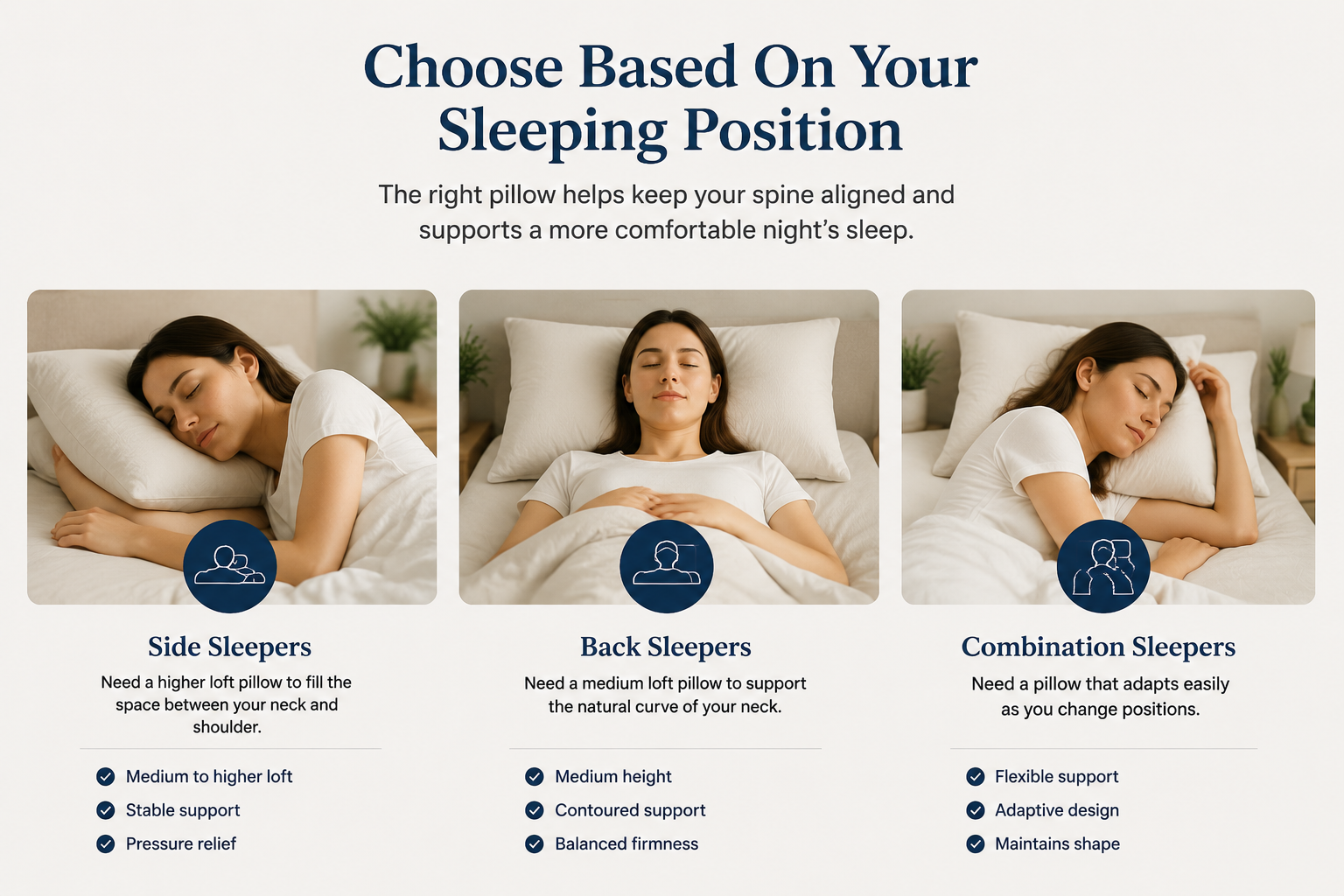
Side Sleepers
Side sleepers usually need more support because there is more space between the shoulder and neck.
A pillow for side sleepers should provide enough height and stability to create a comfortable sleeping position.
Look for:
✓ Supportive pillow height
✓ Stable neck support
✓ Pressure-relieving materials
✓ Stable neck support
✓ Pressure-relieving materials
A properly designed pillow can help create a more balanced feel while sleeping on your side.
Back Sleepers
Back sleepers usually benefit from a pillow that supports the neck’s natural curve without pushing the head too far forward.
Look for:
✓ Medium height
✓ Contoured support
✓ Balanced firmness
✓ Contoured support
✓ Balanced firmness
Combination Sleepers
If you change positions throughout the night, choose a pillow that can adapt to movement.
Look for:
✓ Flexible comfort
✓ Shape retention
✓ Balanced support
✓ Shape retention
✓ Balanced support
Tip 2: Consider Memory Foam Support
Memory foam pillows have become popular because they respond to pressure and help distribute support more evenly.
Unlike traditional filling materials that may flatten over time, memory foam is designed to maintain its structure and provide a more consistent feel.
A quality memory foam pillow can be a good choice for sleepers looking for long-lasting comfort and stable support.
When choosing a memory foam pillow, consider:
- Foam quality
- Support level
- Breathability
- Overall comfort
Tip 3: Pay Attention To Pillow Shape
The shape of a pillow can affect how it supports your sleeping posture.
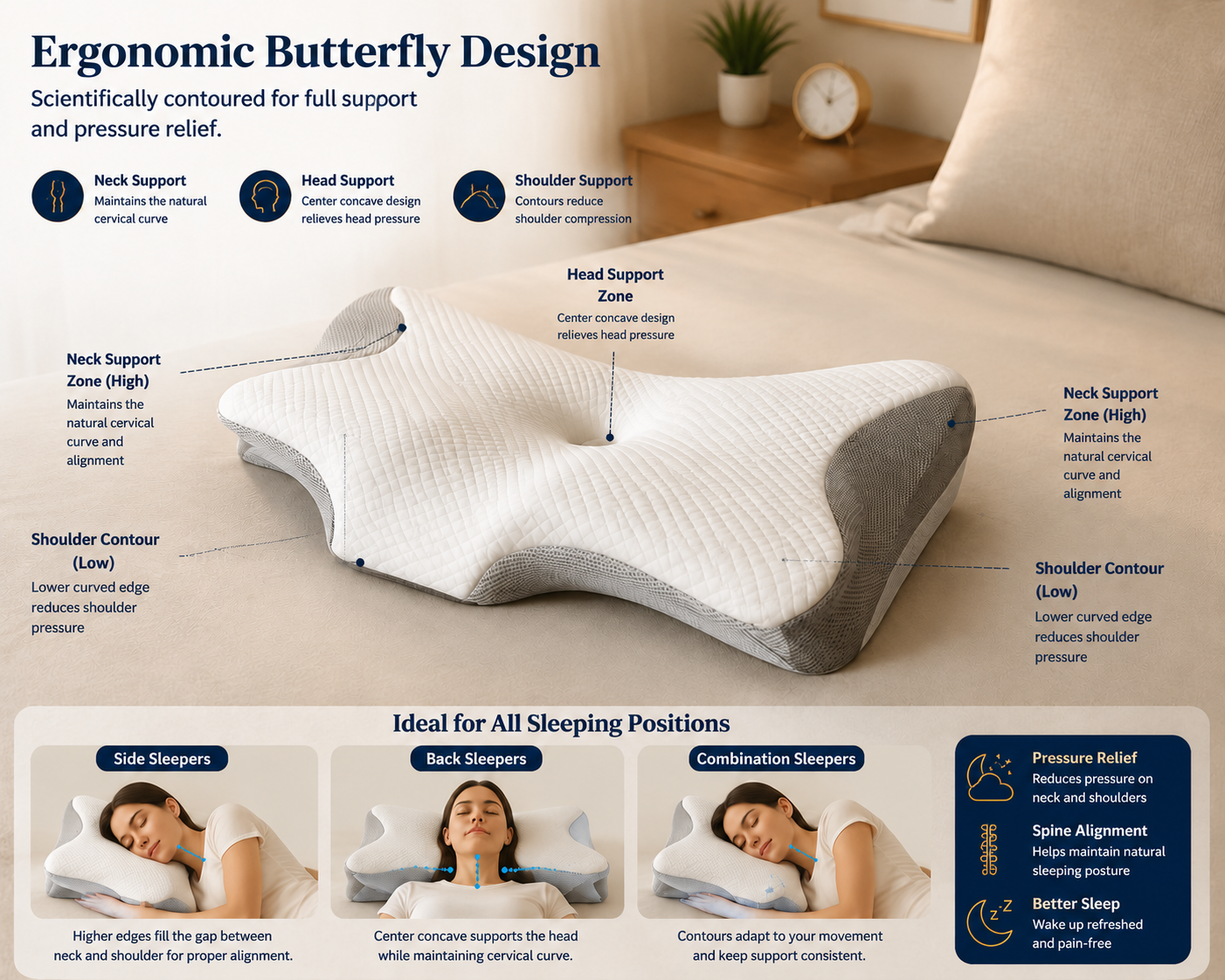
Ergonomic pillows are designed with specific contours to provide dedicated support areas for:
✓ Head support
✓ Neck support
✓ Shoulder comfort
✓ Neck support
✓ Shoulder comfort
Different pillow shapes serve different purposes.
For example, contour pillows are designed to follow the body's natural curves, while butterfly-shaped pillows use a unique contour design with dedicated support areas for the head, neck, and shoulders.
A well-designed ergonomic pillow combines thoughtful shape design with supportive materials to create a more comfortable sleep experience.
Finding The Right Ergonomic Pillow For Better Sleep
The right pillow should match your body, sleeping style, and comfort preferences.
For sleepers looking for a combination of ergonomic design and memory foam support, there are many options available. One example is the Harlven Butterfly Memory Foam Pillow, which combines a butterfly contour structure, slow-rebound memory foam, and a breathable comfort cover to create a balanced and comfortable sleep experience.
A better pillow choice is not about changing your entire sleep routine.
Sometimes, improving one small part of your sleep environment can create a more comfortable experience every night.
Before Choosing Your Next Pillow, Ask Yourself:
✓ Does my pillow support my neck comfortably?
✓ Does it match my sleeping position?
✓ Does it maintain its shape over time?
✓ Do I wake up feeling refreshed?
✓ Does it match my sleeping position?
✓ Does it maintain its shape over time?
✓ Do I wake up feeling refreshed?
The right pillow is not just a bedroom accessory.
It is an important part of creating a better sleep environment.